Skip to main content

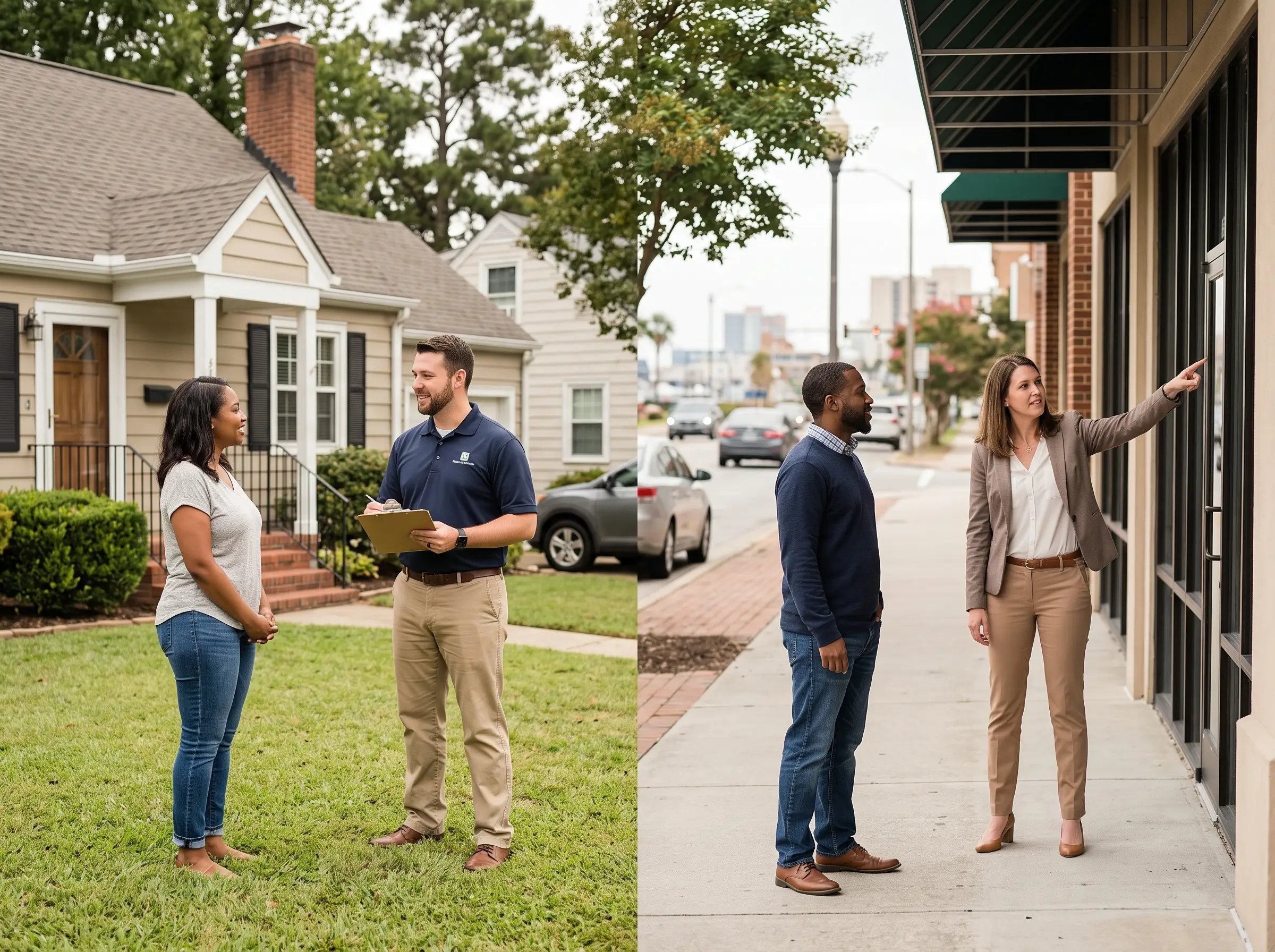
"Different strokes for different folks" applies to property management, too.
Residential and commercial properties may both collect rent, but they require different strategies for leasing, tenant management, maintenance, and risk management.
For Norfolk landlords, knowing which approach fits your property can help you manage responsibly, control costs, increase income, and protect long-term rental income.
Key Takeaways
Residential property management focuses on keeping your rental property occupied, maintained, compliant, and financially productive while supporting residential tenants.
Commercial property management serves a different property type, with business tenants, commercial leases, specialized responsibilities, and more complex operating considerations.
If you own single-family homes, condos, apartments, or other residential real estate in Hampton Roads, a local property management company can help you manage marketing, tenant placement, rent collection, maintenance, inspections, and compliance.
What Is the Difference Between Residential and Commercial Property Management?
Residential and commercial properties can both generate rental income, but you manage them with different priorities. Your residential property serves as someone's home, while commercial real estate provides space for a business to operate, making the tenant relationship, lease structure, and daily responsibilities fundamentally different.
What Does Residential Property Management Require?
When you manage a residential rental, your responsibilities follow the tenant's experience from application through move-out. You need to market the property, evaluate prospective tenants consistently, prepare residential leases, collect rent, respond to maintenance requests, document inspections, and keep the property aligned with applicable Virginia requirements.
For example, if you own a single-family home in Norfolk and your tenant reports an HVAC problem during a hot summer weekend, the issue cannot simply wait for a convenient time on your calendar.
A responsive residential property manager coordinates the repair, communicates with the tenant, documents the work, and helps prevent a small problem from becoming a larger expense.
Your residential management workflow may include:
Rental marketing and pricing
Lease preparation and renewals
Rent collection and reporting
Move-in and move-out inspections
Maintenance coordination
Tenant communication
That structure matters because consistent management helps you spend less time reacting to tenant moves and maintenance calls while keeping your rental property positioned for reliable income.
How Does Commercial Management Differ?
Commercial management operates around a business tenant's needs, the property's intended use, and the terms negotiated in a commercial lease. Depending on the asset, responsibilities can involve operating expenses, utilities, insurance, common areas, building systems, tenant improvements, and specialized maintenance.
Commercial leases can also allocate expenses differently; for example, a triple net arrangement may shift certain property expenses to the commercial tenant. The important point is that you should never assume who handles a repair, tax, utility, or insurance cost without reviewing the contract.
What Are the Key Differences for Norfolk Property Owners?
The biggest differences come down to tenant type, lease structure, maintenance responsibilities, compliance, and financial management. Understanding those distinctions helps you avoid treating two property types as though they follow the same playbook.
Your management priorities can change based on:
Property type and location
Residential or commercial tenant
Lease length and contract terms
Maintenance responsibilities
Utilities and insurance
Vacancy and tenant turnover
Income and operating costs
How Do Maintenance Responsibilities Change?
Maintenance becomes especially important when you compare the two property types because the physical demands of a home can differ sharply from those of commercial space. Your lease and applicable law should establish responsibilities, but you still need a reliable process for receiving requests, assigning vendors, documenting repairs, and following up.
Virginia's Residential Landlord and Tenant Act establishes duties surrounding rental agreements and landlord-tenant relationships, while Virginia law also addresses maintenance and habitability requirements.
A professional workflow helps you respond consistently, rather than making different decisions for each tenant or property.
What Should You Know About Fair Housing and Virginia Rental Laws?
If you are a Virginia residential landlord, compliance should be part of your everyday management process, not something you check only after a dispute arises. Your screening, leasing, notices, records, and tenant communications should follow applicable federal, state, and local requirements.
Virginia's current landlord-tenant framework covers rental agreements, rent, notices, tenant records, and landlord-tenant obligations.
Fair housing requirements also mean you need consistent standards when marketing your property, evaluating prospective tenants, and making rental decisions.
How Can a Property Management Company Help You in Hampton Roads?
Managing your own rental can work when you have the time, knowledge, and systems to handle every part of the process. But as your portfolio grows—or as your rental property becomes another responsibility competing with your work and personal life—professional management can turn scattered tasks into a repeatable system.
In Hampton Roads, local knowledge matters because the region encompasses Norfolk, Virginia Beach, Chesapeake, Portsmouth, Suffolk, Hampton, Newport News, and surrounding communities, each with distinct neighborhoods and property characteristics.
Norfolk's 2026 housing work also identifies affordability, property taxes, insurance costs, and housing supply as important local pressures, reinforcing why landlords need to watch both market conditions and operating expenses.
A property management company can take responsibility for services such as:
Rental price analysis and marketing
Tenant screening and placement
Lease preparation
Rent collection
Maintenance coordination
Property inspections
Owner reporting
Eviction assistance and compliance support
The benefit is not simply convenience. With a team handling the daily rental workflow, you can make better decisions about your asset while spending less time chasing rent, coordinating vendors, answering routine questions, and handling every tenant issue yourself.
For Hampton Roads landlords, that local connection can also make a practical difference. Renters Warehouse Hampton Roads states that its services include rental pricing, property marketing, tenant screening, lease documents, rent collection, maintenance support, inspections, reporting, and compliance-focused management for single- and multifamily rentals.
Frequently Asked Questions
Q1. Can a commercial property management company handle residential tenancies?
Usually, commercial property managers focus on commercial properties, while residential managers handle primary residences and personal homes.
Q2. Do commercial properties always make more money?
Not necessarily. Commercial properties may generate more income but often involve higher fees, responsibilities, and management complexity.
Q3. Why is the Virginia Property Law Act important for landlords?
Understanding applicable legislation is essential to stay responsible and protect your property, tenants, and clients.
Q4. Are property management fees different for commercial and residential properties?
Yes. Fees vary by property type, services, site requirements, and management responsibilities.
From Property to Possibility: Let Your Rental Work Smarter
You may own the property, but you do not have to carry every responsibility that comes with it. At Renters Warehouse Hampton Roads, we help local owners price, market, lease, collect, maintain, and protect their rental properties with local expertise and professional systems.
Property management should give you more than just a tenant in a unit; it should provide greater visibility, fewer daily headaches, and more confidence in your investment.
If you are ready to make your Hampton Roads rental easier to manage, explore our property management services and see how our team can help you move from managing every detail to managing your investment with purpose.
Other Resources:
What Guarantees Should Hampton Landlords Look for in a Property Management Company?
Best Platforms for Advertising Your Rental Property Online: A Guide for Hampton Landlords